
The Kyrgyzstan Work Goes Live
The Weekly Frame #34: July 2nd, 2026

Hi friends,
Last week I told you I was buried in the editing cave. This week the cave finally opened up a little, and a lot of the Kyrgyzstan work started going live.
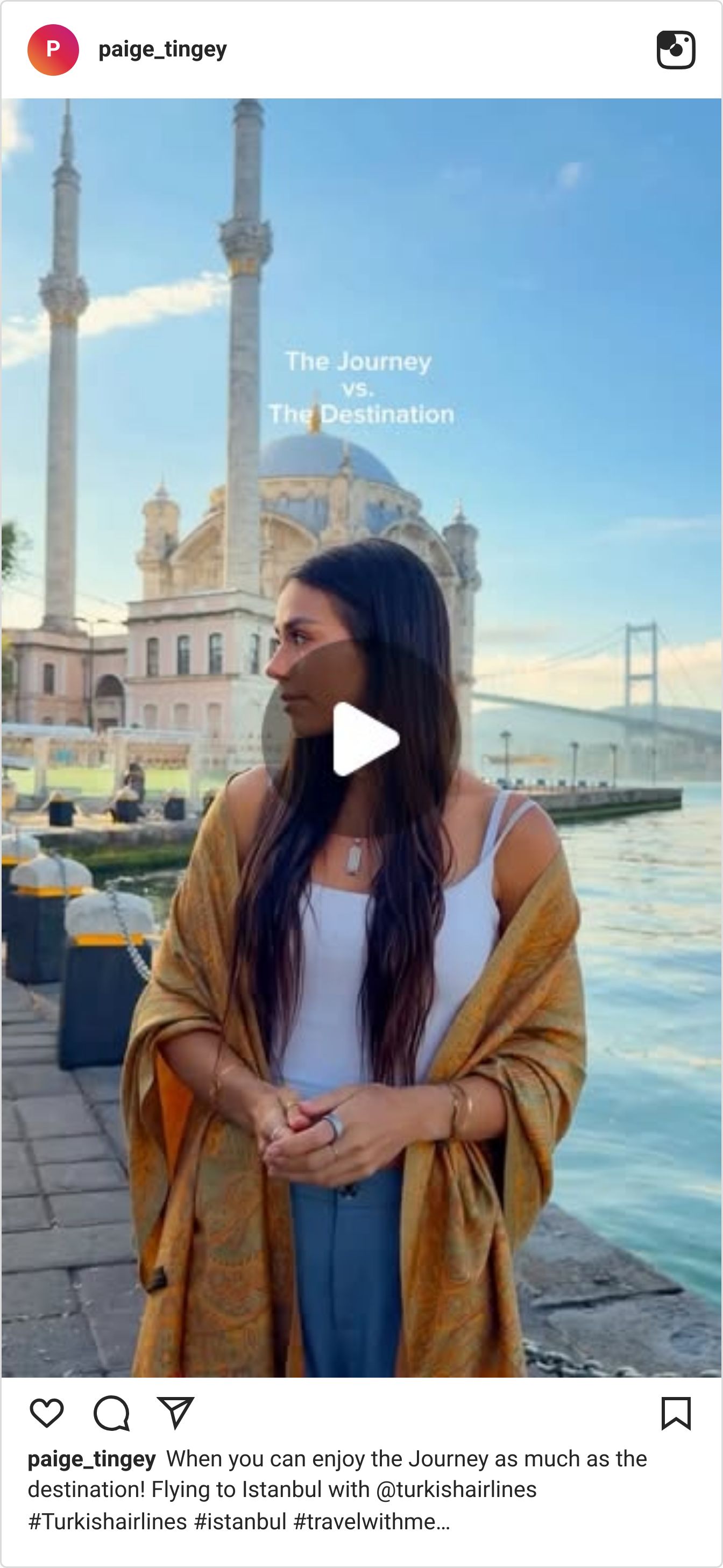
Some of it I've been sitting on for a while: the reels with Turkish Airlines, the footage from traveling with the Kyrgyz Tourism group, and the frames from photographing eagle hunters, which is still one of the more surreal mornings I've ever had behind a camera.
In the middle of all that, I did something I almost never do during a busy stretch. I stepped away from the computer for two days to work on a fun house project.
It wasn't rest exactly, there was a to-do list and a fair amount of sweat, but there's something clarifying about a kind of work where you can see the progress right in front of you at the end of the day.
I came back to editing with a clearer head than I've had in weeks.
Now, let's get into this week's tip.
Tip of the Week: Why Empty Space Might Be Your Most Underused Tool

Most of us instinctively fill the frame. We zoom in, get closer, try to pack as much of the beautiful thing into the photo as we can. But some of the most powerful images do the opposite. They give the subject room to breathe.
Negative space is the empty or uncluttered area around your subject: open sky, still water, a wall, a field of fog. It sounds like "nothing," but it does real work.
It isolates your subject. A lone figure against a huge sky reads instantly. The eye has nowhere else to go, so it lands exactly where you want it.
It creates mood. Emptiness feels calm, sometimes lonely, sometimes vast. A tiny subject in a large frame communicates scale and quiet in a way a busy composition never can.
It gives the image somewhere to rest. A frame packed edge to edge can feel exhausting. Space is what lets a viewer sit with a photo instead of bouncing around it.
Next time you're set up, try composing your subject small and off to one side, and let the rest of the frame stay open. It goes against instinct, which is exactly why it works.
What's Happening in Photography Right Now

DJI detailed the Osmo Pocket 4P at an event in Malta on June 29. The new pocket gimbal adds a second camera with a 3x telephoto (roughly a 60mm equivalent) alongside the wide lens, and DJI is claiming up to 17 stops of dynamic range with a new D-Log2 profile. It's rolling out internationally now in both black and white, though the US release is blocked by the ongoing FCC situation affecting recent DJI hardware.
Adobe is acquiring Topaz Labs. Announced June 25, the deal brings in the company behind the denoise and upscaling models a lot of photographers already run on their files. Adobe recently folded Topaz's Noise-Aware Sharpen model directly into Lightroom, so the acquisition mostly formalizes a direction that was already underway.
VSCO launched VSCO One. The $499.99-per-year subscription (live June 23) bundles editing, client galleries, a portfolio builder, and booking and invoicing tools into one system for working photographers, alongside its new Studio Pro app. Studio Pro's headline feature is batch editing, applying one look to as many as 100 photos at once, though it's iOS-only for now with a Mac version promised later this year.
Creator Highlight: Pie Aerts (Documentary & Conservation Photographer)

Pie Aerts is a Dutch documentary and wildlife photographer whose work sits right where people, animals, and wild places overlap. He photographs what he calls human and wildlife coexistence, and his images tend to whisper rather than shout, which is rare in a genre that usually reaches for the dramatic.
He's probably best known for co-founding Prints for Wildlife, a print fundraiser he started during the 2020 lockdowns that has since raised more than $2.5 million for African Parks and Conservation International by uniting hundreds of photographers to sell prints for a shared cause. He's also a Canon ambassador and leads small expeditions to places like the Himalayas, Patagonia, and the Arctic.
One More Thing…

I mentioned the house project up top. I'll spare you the full before-and-after, but those two days did something I really valued. When I stopped looking at photos and started using my hands on a completely different problem, the creative part of my brain reset quietly in the background. By the time I sat back down at the desk, edits that had felt stuck for a week suddenly felt obvious.
I think a lot of us treat rest and productivity as opposites. Lately I'm more convinced that switching the kind of work you're doing is its own form of rest.
This week's question: what's the non-photography thing you do to reset your creative brain? Cooking, running, gardening, staring at a wall, I want to hear about it and how it shifts your mental state.
See you next week,
Paige
P.S. Curious how I edit my photos? These are the exact presets I use for almost every travel & landscape shoot (designed for both mobile and desktop).
P.P.S. Some of my most popular travel and landscape shots are available as prints through Big Wall Decor. If you've ever wanted one on your wall, check them out here.