
Nepal Had a Backup Plan For Me
The Weekly Frame #26: May 7th, 2026

Hi friends,
I made it home from Nepal late last night. Thirty-four hours of flying through Hong Kong, a finger that's mostly healed, and a brain that hasn't quite caught up with the time zones yet. But I'm here - the rabies vaccine series is on track and the trip ended up being so much more than I expected.
A quick recap for anyone who missed last week. After the dog bite on day three of the Manaslu Circuit, I got helicoptered to Kathmandu, started the vaccine series, and had to scrap the rest of the trek. What I didn't say last week was how much of Nepal I still hadn't seen. I was hoping the trail would be the whole story, but it turned out to be the start.
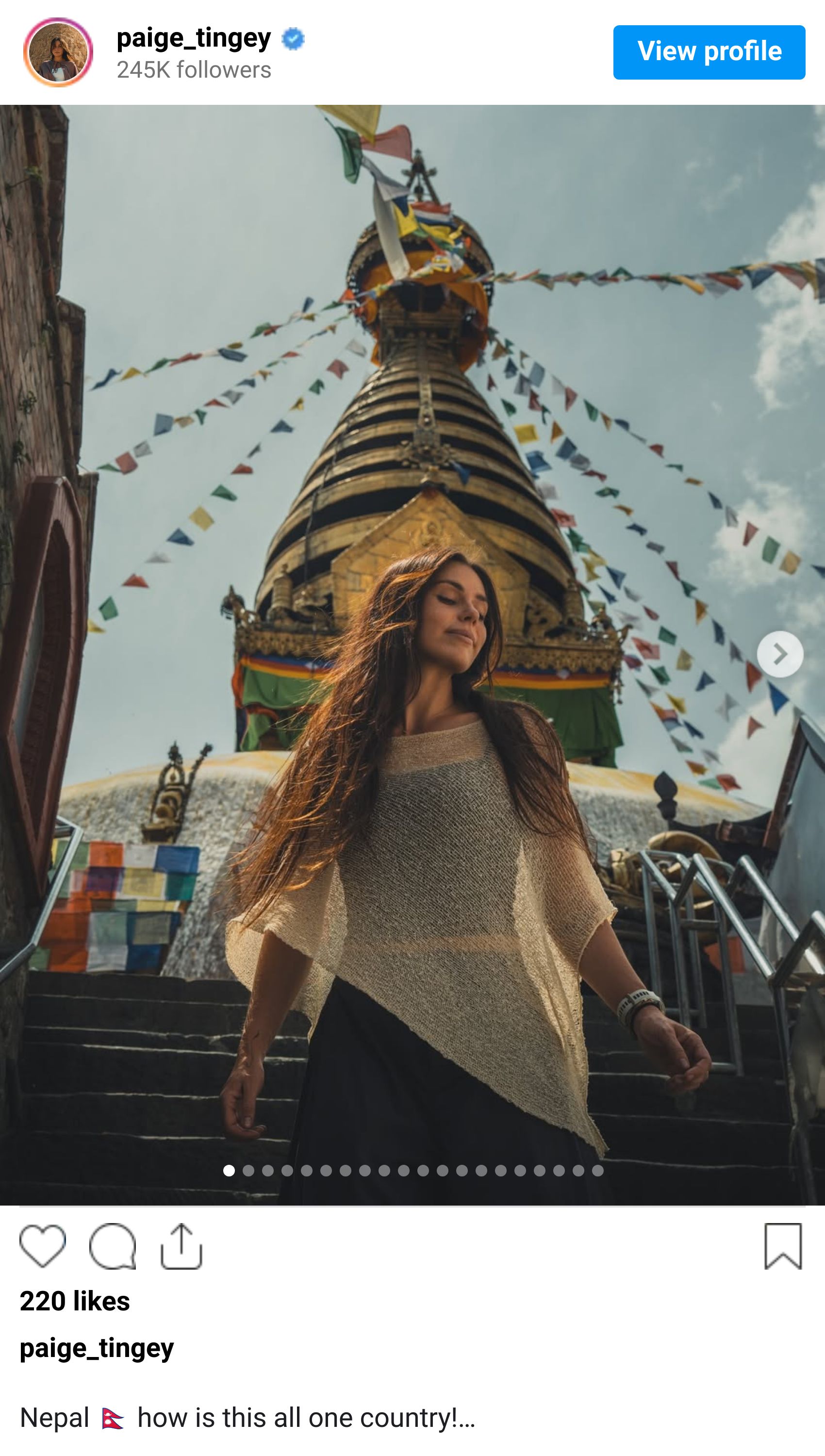
So I rerouted. A few more days in Kathmandu, wandering temples I didn’t know existed. Then south to Chitwan and a stay in Sauraha for jeep safaris and slow walks through the jungle, with one-horned rhinos chest-deep in the river and gharials (one of the rarest creatures on earth) sunbathing on the banks like they had nowhere to be.
Some of those photos are in this edition’s images, and the full carousel went up on Instagram this morning if you want to see the rest.
Tip of the Week: The Lightroom Setting Almost No One Changes

Before you touch a single slider in Lightroom, there's a small dropdown at the top of the Develop module that controls how every adjustment after it is going to render. It's labeled Profile, it defaults to Adobe Color, and most photographers never click it.
That's a missed opportunity, because the profile is your starting point. Adobe Color is a neutral, slightly warm baseline designed to look reasonable for almost any image. It's safe, but it can also be a bit flat. If you've ever felt like your edits start from zero every time and require a lot of work to get them somewhere interesting, the profile is usually why.
A few worth knowing:
Adobe Landscape boosts greens and blues right out of the gate. For most outdoor work it gives you a stronger foundation than Adobe Color does, which means less heavy lifting later.
Adobe Standard is closer to what your camera's JPEG would have looked like. Useful when you want to honor the scene as you saw it without much interpretation.
Camera-matching profiles (Camera Standard, Camera Vivid, Camera Neutral, etc.) pull in the color rendering your specific camera was designed to produce. Sony users in particular often find Camera Standard pleasant. Fuji shooters get film simulations.
Try this: open a landscape image you've already edited. Click the Profile dropdown. Switch to Adobe Landscape. Watch what changes without you touching anything else. If you like the new starting point, build your edits from there. You'll usually find you need less saturation, less clarity, and less work overall to get where you want to go.
The sliders haven't changed, but the point you're starting from has.
What's Happening in Photography Right Now

Sony and Canon both launch new flagships on May 13. Sony is expected to announce the a7R VI on May 13, with a 67-megapixel partially stacked sensor, 30 fps RAW burst, and a price around $5,000. The same day, Canon is rumored to launch the EOS R6 V alongside a new RF 20-50mm f/4 L IS PZ lens. Sony will pair the camera with a brand new FE 100-400mm f/4.5 GM telephoto. Two of the biggest camera makers competing on the same date is unusual, and the simultaneous launch is going to make next week a busy one for anyone shopping in this tier.
May ends with a Blue Moon. The second full moon of May rises on May 31, and it's the last full moon before the summer solstice starts shortening the dark window for night photography in the Northern Hemisphere. Worth planning around if you want a clean moonrise composition over a recognizable foreground. The classical advice still applies: use a telephoto, scout your foreground in advance, and shoot the moon while it's still close to the horizon and visually larger.
Creator Highlight: Reuben Wu (Visionary Landscape Photographer)

Reuben Wu is a Chicago-based photographer whose work redefined what a landscape photograph can look like.
He came to photography through music (he was a member of the band Ladytron) and industrial design, and that background shows up in everything he does. His Lux Noctis series uses drones with onboard lights to paint nighttime landscapes with artificial illumination, creating images that look more like stills from a science fiction film than traditional landscape work. His prints are in the permanent collections of MoMA, the Met, and the Guggenheim.
What I keep coming back to in his work is the relationship between vision and post-processing. The lighting happens in-camera, but the finished image is a deeply considered composition that uses every editing tool available. For anyone who's been told that "real photography" is about getting it right in-camera and minimizing the edit, his work is a useful counterargument. Some of the most original landscape photography being made today is happening because of what's possible in post.
He's a good follow if you're looking to expand what you think a landscape photograph is allowed to be.
Gear Worth Mentioning: Patagonia Black Hole Duffel 70L

Few bags handle international travel as well as this one does.
The Black Hole Duffel is built from a heavily coated, weather-resistant ripstop that shrugs off rain, mud, and rough baggage handlers without showing wear. The 70L size hits a sweet spot for longer trips: roomy enough for two weeks of clothes and gear, compact enough to clear most checked-bag limits without overage fees.
Stowable backpack straps make it carryable when wheels aren't an option, reinforced grab handles run along every side, and the lockable main zipper keeps things simple. The interior is one big compartment with a couple of mesh pockets, which sounds basic because it is.
The point is to take a beating and keep going, and this also comes with Patagonia's Worn Wear lifetime repair program.
(Full transparency: I earn a small commission through this link. It helps keep this newsletter free and my coffee mug full. Thanks for supporting!)
One More Thing…

That's it for this week. By the time the next edition lands in your inbox I'll be getting ready to leave for Kenya with the National Geographic Creator Cohort, which has been on the calendar for months and feels surreal to actually be packing for. More on that soon.
A genuine thank you to everyone who replied last week. The notes checking in on me were really appreciated and gave me a lot to think about while I was sitting in the airport in Hong Kong. I haven’t had a chance to respond to all of them yet, but I will as soon as I can (playing lots of catch up right now!).
This week's question: Is there a place you've been that left a mark on you in a way you didn't expect? I’d love to hear all about it. :)
See you next week,
Paige
P.S. Curious how I edit my photos? These are the exact presets I use for almost every travel & landscape shoot (designed for both mobile and desktop).
P.P.S. Some of my most popular travel and landscape shots are available as prints through Big Wall Decor. If you've ever wanted one on your wall, check them out here.