
Where Mood Actually Lives in Lightroom
The Weekly Frame #23: April 16th, 2026

Hi friends,
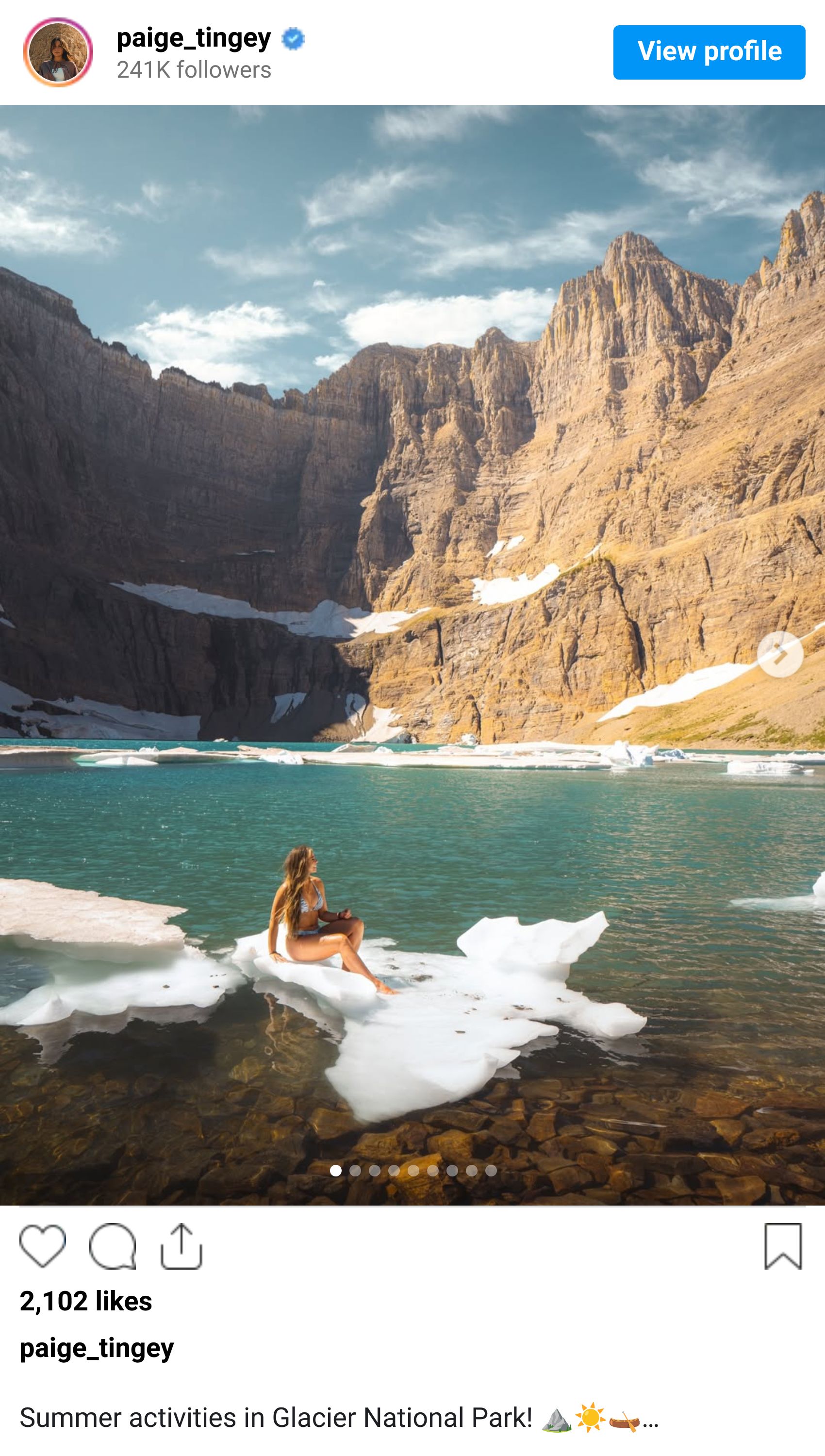
I posted a new Glacier set yesterday morning and it immediately made me want summer in the mountains. Sitting on the ice shelf at that alpine lake with those peaks stacked behind you is one of those moments where you just stop planning the shot and let the place do what it's going to do.
But mentally, I'm already somewhere else. I fly to Kathmandu in a few days to hike the Manaslu Circuit, ten days through villages, suspension bridges, yak caravans, and some of the most dramatic terrain on the planet. Larkya Pass sits above 5,000 meters, and from what I've been told, it's the kind of day that rearranges how you think about altitude, weather, and what "remote" actually means.
I'll have more to share on the other side. For now, gear is spread across the living room floor and I keep adding things to the pile and then taking them back out.
In between all the packing chaos, I've been spending time in Lightroom going back through older catalogs, and it reminded me of a panel I think a lot of people skip too quickly.
Tip of the Week: The Tone Curve Is Where Mood Actually Lives

Most of the "mood" you see in cinematic landscape edits isn't coming from presets or saturation. It's coming from one panel that a lot of photographers glance at once, decide looks intimidating, and scroll right past: the tone curve.
The tone curve is a graph of every brightness value in your image, from pure black in the bottom-left corner to pure white in the top-right. The diagonal line across it is your image's current tonal distribution. When you bend that line, you're telling Lightroom to redistribute brightness in a way the basic sliders simply can't match.
Two shapes do most of the work:
The gentle S-curve. Click a point about a quarter of the way up the line and drag it down slightly. Click another about three-quarters up and drag it up slightly. You've just added contrast that feels filmic instead of harsh. Unlike the contrast slider, it protects your extreme highlights and shadows from clipping.
The lifted black point. Grab the very bottom-left corner of the curve and drag it straight up by a small amount. Your darkest blacks become dark grays, and your image takes on that matte, slightly analog look that defines a lot of modern travel and editorial work. One move, immediate mood shift.
The individual Red, Green, and Blue channel curves are where color grading really happens, but start with the main RGB curve first. Get comfortable bending a line before you start bending color.
Try this: On your next edit, skip the contrast slider entirely. Go straight to the tone curve and build an S-curve by hand. You'll feel the difference within five seconds, and you'll stop relying on the contrast slider after a week.
What's Happening in Photography Right Now

Sony World Photography Awards name their 2026 winners today. The Sony World Photography Awards ceremony happens today at Somerset House in London, where the overall Photographer of the Year will be named from 30 Professional finalists. Joel Meyerowitz is receiving this year's Outstanding Contribution to Photography award, joining a list that includes Sebastião Salgado, William Eggleston, and Susan Meiselas. The exhibition opens to the public tomorrow and runs through May 4.
GoPro previews a full platform reset at NAB next week. GoPro will reveal a new camera generation powered by its next-gen GP3 processor at the NAB Show in Las Vegas starting April 18, and leaked images already show a larger lens assembly suggesting a bigger sensor. The company is positioning GP3 as the chip behind a full lineup spanning action cameras, 360 cameras, vlogging tools, and compact cinema systems. After several years of DJI and Insta360 trading dominance, this is GoPro's most aggressive hardware push in a while.
Creator Highlight: Lucia Griggi (Expedition and Ocean Photography)

Lucia Griggi is a British photographer whose work lives at the intersection of expedition travel, marine wildlife, and remote cultures. She shoots for National Geographic expeditions, leads photo workshops on polar voyages, and has spent years photographing everything from humpback whales in Tonga to pack ice in Antarctica.
What I appreciate about her work is how grounded it feels. She's working in some of the most extreme environments on earth, but the images never feel like they're flexing about the conditions. They feel like she's genuinely curious about the place and the animals and the people she's spending time with, and the camera is along for the ride.
She also does a good job of showing the less photogenic side of expedition work (cold hands, broken gear, failed attempts), which is a useful counterweight to the hyper-polished version of travel photography most of us see on our feeds. If you're drawn to photography that requires patience and a willingness to be uncomfortable, her work is a good reference.
Gear Worth Mentioning: The Hiking Boot I Can Always Rely On

With the Manaslu Circuit coming up, I've been thinking carefully about footwear, and the Altra Lone Peak 9 Waterproof Mid has been my go-to boot for a couple years now.
Altra's signature is their foot-shaped toe box and zero-drop platform, which means your foot sits level instead of on a heel-elevated slope. On long mountain days, that matters more than you'd expect. The wider toe box lets your toes spread naturally on descents instead of getting crushed into the front of the boot, and the level platform means fewer hot spots on your Achilles over the course of eight or ten hours.
The mid-height version adds ankle support without the stiffness of a traditional mountaineering boot. It's waterproof for river crossings and wet trail conditions, and light enough that it doesn't feel like you're dragging extra weight uphill. They really are so comfortable and the new color options for both men and women look awesome.
If you're planning any multi-day hikes this summer, whether it's the Himalayas or your local backcountry, this is worth trying on.
(Full transparency: I earn a small commission through this link. It helps keep this newsletter free and my coffee mug full. Thanks for supporting!)
One More Thing…

That's it for this week. By the time the next newsletter lands, I'll be somewhere in the foothills of the Himalayas, either blissed out on mountain air or questioning every decision that led me to carry a camera kit up to 5,100 meters. Probably both.
I'll likely be off the grid for parts of the trek, so if I'm slow to reply to anything over the next couple weeks, that's why. I'll be back with stories, photos, and whatever lessons the trail wants to teach me about light, patience, and carrying less.
This week's question: What's the one piece of gear you always overpack and the one you always wish you'd brought? I'm staring at my gear pile right now trying to figure out both.
See you next week,
Paige
P.S. Curious how I edit my photos? These are the exact presets I use for almost every travel & landscape shoot (designed for both mobile and desktop).
P.P.S. Some of my most popular travel and landscape shots are available as prints through Big Wall Decor. If you've ever wanted one on your wall, check them out here.