
Salt Lake Cherry Blossoms & Dust Clouds
The Weekly Frame #20: March 26th, 2026

Hi friends,
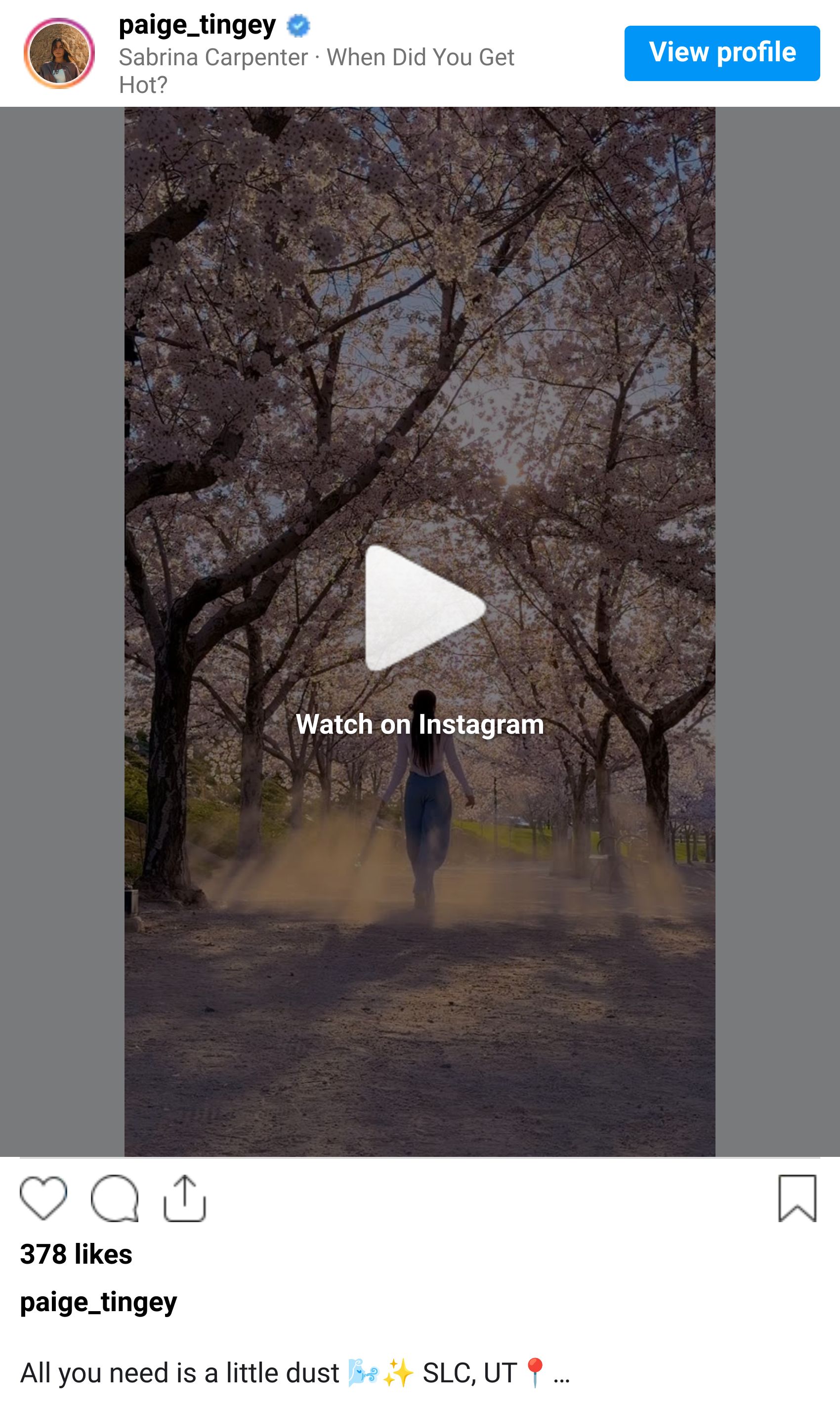
Spring showed up in Salt Lake this week and brought the cherry blossoms with it. The trees at the Utah State Capitol were absolutely going off, so you know I had to get out there twice: once in the evening and again the next morning for sunrise.
The evening shoot was surprisingly packed… like tripods and cameras everywhere packed. Lucky for us, a lot fewer people showed up around sunrise so we could get a bit more creative.
At one point we started kicking up dust from the ground to add some atmosphere to the video, which definitely earned us a few, funny sideways glances from the people around us.
Don’t worry though, there's always a balance between doing what it takes to get the shot and being respectful of everyone else trying to enjoy the same space. So we did our best to be quick with it and stay out of everyone’s way.
I also have some Taiwan content to share. My travel reel from the trip went up this week, and there's a separate one for EVA Air showing the Premium Economy experience from SLC to Taipei. You’ll see them further down in this newsletter.
For now, let's get into this week's tip. I wanted to go a little more technical this time and talk about something in Lightroom that I think most people either skip entirely or barely scratch the surface of.
Tip of the Week: The HSL Panel is the Most Underused Tool in Lightroom

Most people open Lightroom, adjust exposure, maybe move the white balance slider, add a little clarity, and call it done. If that sounds familiar, you're leaving a lot of control on the table.
The HSL panel (Hue, Saturation, Luminance) is where you get surgical control over individual colors in your image without affecting everything else. It lets you shift the hue of just the blues in your sky, desaturate only the greens in a forest scene, or brighten the oranges in a sunset while keeping the rest of the tones exactly where they are.
Hue shifts a color toward its neighbors on the spectrum. Slide the orange hue slider left and your warm tones go more red. Slide it right and they go more yellow. This is incredibly useful for skin tones in travel portraits or for dialing in the exact shade of blue you want in water and sky.
Saturation controls how intense each color is. This is where restraint matters. Instead of cranking the global saturation slider (which affects everything and usually looks overdone), try boosting only the one or two colors that serve the image. For landscapes, I'll often desaturate blues and greens slightly since I prefer a more moody green and a steel-colored blue. I typically like bumping the oranges to make sure I keep a vibrant contrast. (you have to watch this carefully though since orange will really affect skin tones if they are present)
Luminance controls how bright or dark a specific color appears. This one is underrated. Darkening the blue luminance channel makes skies moodier and more dramatic without any exposure adjustments. Brightening the green luminance can make foliage feel lighter and more alive while darkening will once again add a more moody look.
A practical starting point: open any landscape image and just adjust the blue luminance slider. Pull it down by 10 or 15 points. Watch what happens to your sky. That single adjustment is often the difference between a flat sky and one that has real depth.
The best part about the HSL panel is that it's non-destructive and you can see the effect instantly. Once you start using it, you'll wonder how you edited without it.
What's Happening in Photography Right Now

DJI files patent lawsuit against Insta360. DJI sued Insta360's parent company, Arashi Vision, in a Shenzhen court this week, claiming six patents covering drone flight control and image processing belong to DJI. The suit alleges former DJI employees developed the technology within a year of leaving. Insta360 founder JK Liu fired back on Weibo, saying all innovations were independently created at Insta360 and alleging that DJI products may actually infringe on 28 of Insta360's own patents. The filing came three days before DJI launched its first 360-degree drone, the Avata 360, putting the two companies in direct competition.
Leica expands its flagship award with a new grant for women photographers. Leica added the LOBA Women Grant to its Oskar Barnack Award program, offering 10,000 euros, a Leica Q camera, and professional mentoring to a female photographer to develop a new project. The first application round just closed on March 15, and the winning project will be exhibited at Leica Galleries and photography festivals worldwide starting in late 2027. It builds on Leica's previous Women Foto Project Award, which launched in the U.S. in 2019, now expanded globally.
A wristwatch with a built-in light meter is heading to Kickstarter. A company called Increment Labs is launching what it calls the world's first photographer-specific watch, the LMW-V1, on Kickstarter May 5. The watch uses a silicon photodiode to give real-time exposure values from your wrist, has a golden hour alarm, and is built from machined aluminum with a design inspired by classic camera bodies. It's expected to retail around $185, with early backer pricing around $150.
Creator Highlight: Lorenz Holder (Red Bull Illume Winner, Adventure Sports)

Lorenz Holder is a German photographer whose work lives at the intersection of extreme sports and fine art landscape photography. He won the Red Bull Illume grand prize, which is essentially the Oscars for adventure and action sports photography, and his winning image is the kind of shot that makes you ask how it was even physically possible to take.
What sets him apart from typical action sports photographers is his approach to composition. He treats the landscape as the primary element and places the athlete within it as a focal point that creates scale and tension. It's very much in line with what we talked about a few weeks ago with adding something to your landscape to give it context.
If you're interested in how to bring more intention and artistry to outdoor photography, Lorenz's work is a masterclass in doing exactly that.
Gear Worth Mentioning: WANDRD PRVKE 31L

If you're looking for a camera backpack that can handle both travel days and actual shoots in the field, the WANDRD PRVKE 31L is one of the best options out there right now. I own a lot of photography backpacks and I find myself reaching for this one when I need something good for a wide range of use cases.
The design is built around a side-loading camera cube at the bottom that fits a camera body and 2-3 lenses, while the main roll-top compartment above holds everything else: laptop, jacket, water bottle, snacks, whatever you need for the day. The roll-top expands when you need more space and compresses down when you don't, which is a small thing that makes a big difference when you're going from a full travel day to a stripped-down morning shoot.
The exterior is weather-resistant, the zippers are sealed, and there's a passport pocket on the back panel that sits against your body. For anyone who's traveled internationally with camera gear and spent the whole time nervously checking their bag, that kind of detail matters.
At around $249 it's not the cheapest camera bag out there, but it's built to last and it does a good job of being one bag for multiple situations rather than needing a separate daypack and a separate camera bag.
(Full transparency: I earn a small commission through this link. It helps keep this newsletter free and my coffee mug full. Thanks for supporting!)
One More Thing…

That's it for this week. Spring is here and it genuinely feels like a turning point in the year. The light is changing, the days are longer, and there's no excuse not to get outside with a camera right now.
I've been spending my evenings editing Taiwan photos and my mornings chasing cherry blossoms around Salt Lake, and it's a good reminder that sometimes your best shooting opportunities are a ten-minute drive from home. You don't always need a 14-hour flight.
This week's question: What's one editing technique you wish you could get better at? Whether it's color grading, masking, retouching, or something else entirely, I'm curious what's on your list. Hit reply and tell me.
See you next week,
Paige
P.S. Curious how I edit my photos? These are the exact presets I use for almost every travel & landscape shoot (designed for both mobile and desktop).