
Why Foregrounds Change Everything
The Weekly Frame #17: March 5th, 2026

Hi friends,
Quick update from the road: I'm currently wrapping up a trip to Taiwan with the Taiwan Tourism Administration. It's been a whirlwind to say the least, and honestly one of my tougher trips in a while.
The Lantern Festival didn't come together the way I'd hoped due to some scheduling complications, but I'm making the most of the remaining days and doing my best to find interesting content before heading home this weekend. More on Taiwan soon.
In the meantime, I posted something this week that I've been wanting to put together for a while… The Utah desert.
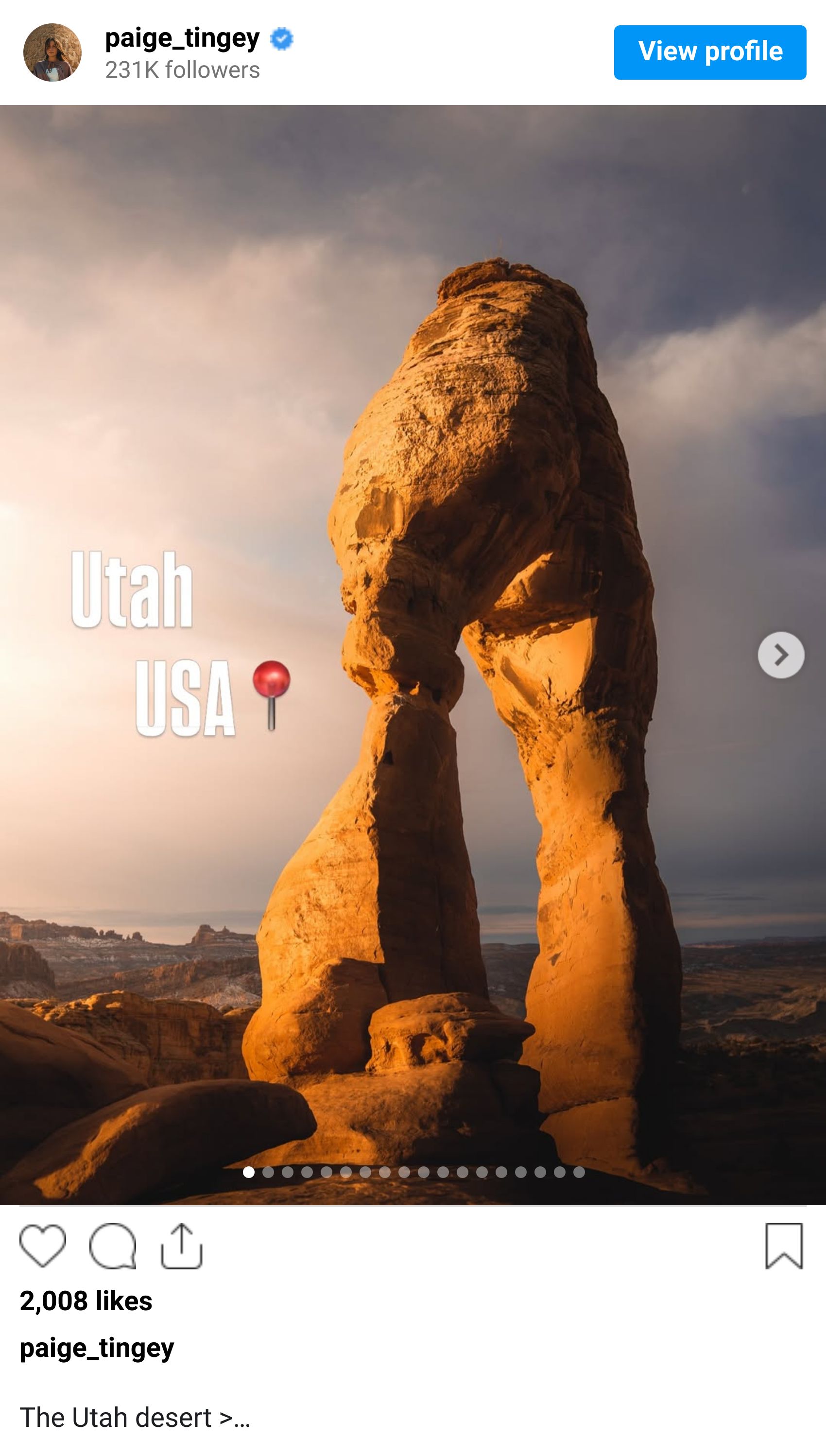
No matter how long I live here, Utah continues to blow my mind. The variety of landscapes within a few hours of each other is absurd.
Arches, slot canyons, desert highways, cliff overlooks. Every trip I take into the Utah Desert, I can always find something new.
Now, let me break down something I use in almost every one of these shots.
Tip of the Week: The Importance of Utilizing Foregrounds

If I had to pick one compositional habit that is sure to improve your landscape photography, it would be this: stop pointing your camera at the horizon and start looking at your feet.
Foreground interest is the difference between a photo that looks like a nice view and one that pulls someone into the scene. It gives the image depth, creates layers, and gives the viewer's eye a path to follow from the bottom of the frame all the way to the background.
In almost every one of my Utah Desert shots, there's something anchoring the bottom of the frame. A textured rock surface. A winding road leading into the distance. A canyon wall curving into the scene.
How to start doing this:
Look down. Before you compose your wide shot, look at what's directly in front of you. Cracked earth, wildflowers, interesting rock patterns, a fallen branch. That's your foreground.
Get low. Dropping your camera to knee height (or lower) exaggerates the foreground and makes it more prominent in the frame. This is especially effective with wide-angle lenses where that distortion can work in your favor.
Low vs High aperture. Play around with how changing the aperture to see how it affects the feeling of the photo. Having the foreground in focus will draw some attention (not a bad thing if the foreground is interesting). Having it blurred will allow the focal point to really be the center of attention.
The wide-angle trap. Wide lenses capture more, but "more" often means more empty, featureless ground. If you're shooting wide, you need foreground interest even more because that empty space at the bottom of the frame can kill the composition.
Next time you're at a scenic viewpoint where everyone else is just pointing their camera straight ahead, look down first and take advantage of that foreground.
What's Happening in Photography Right Now

CP+ 2026 set records: 59,000 visitors, 149 exhibitors. The world's biggest camera expo wrapped up in Yokohama last weekend with record attendance. The standout story wasn't one specific camera but the direction of the industry: Canon teased a retro concept camera with a waist-level viewfinder designed to slow photographers down. Sigma previewed an 85mm f/1.2 Art lens that portrait photographers are already losing their minds over. Nikon revealed a lighter 70-200mm f/2.8 II. And the overall vibe was less about megapixel wars and more about making cameras that feel good to hold and inspire you to shoot.
Sony World Photography Awards Professional finalists announced. Sony just revealed the 30 finalists in the Professional competition of their 2026 World Photography Awards. This is the heavyweight division: multi-image series submissions judged on narrative depth and technical mastery. Over 430,000 images were submitted from 200+ countries. Category winners will be announced April 16 in London, with a public exhibition at Somerset House running through early May.
Flickr launches MODE, its first in-person photography festival. Flickr just announced MODE by Flickr, a three-day photography festival in Minneapolis this September (18-20). Workshops, exhibitions, photowalks, live music, and keynotes. It's their first move into live events and it signals something interesting: even as everything moves online, the demand for in-person creative gathering keeps growing.
Gear Worth Mentioning: Nitecore NU25 UL Rechargeable Headlamp

This one's for the sunrise chasers.
If you've ever hiked to a shooting location in the dark to set up for golden hour, a good headlamp makes all the difference.
The Nitecore NU25 UL weighs practically nothing (under 1.5 oz), charges via USB-C, and has a red light mode that preserves your night vision while you're getting set up.
You can keep it clipped to your camera bag so it's always there when you need it. It's one of those small purchases that pays for itself the first time you're not stumbling over rocks at 5am trying to find a lens cap you dropped.
(Full transparency: I earn a small commission through this link. It helps keep this newsletter free and my coffee mug full. Thanks for supporting!)
One More Thing…

Next week I'll hopefully have some Taiwan content that I’m proud of, once I've had time to go through it all and start to edit. And the Nat Geo Creator Cohort has some exciting things coming up that I can't wait to tell you about as well.
This week's question: What's the landscape closest to your home that you keep going back to and will never get tired of?
See you next week,
Paige
P.S. Curious how I edit my photos? These are the exact presets I use for almost every travel & landscape shoot (designed for both mobile and desktop).