
The Smallest Detail That Changes Every Landscape
The Weekly Frame #14: February 12th, 2026

Hi friends,
A few fun things happening this week.
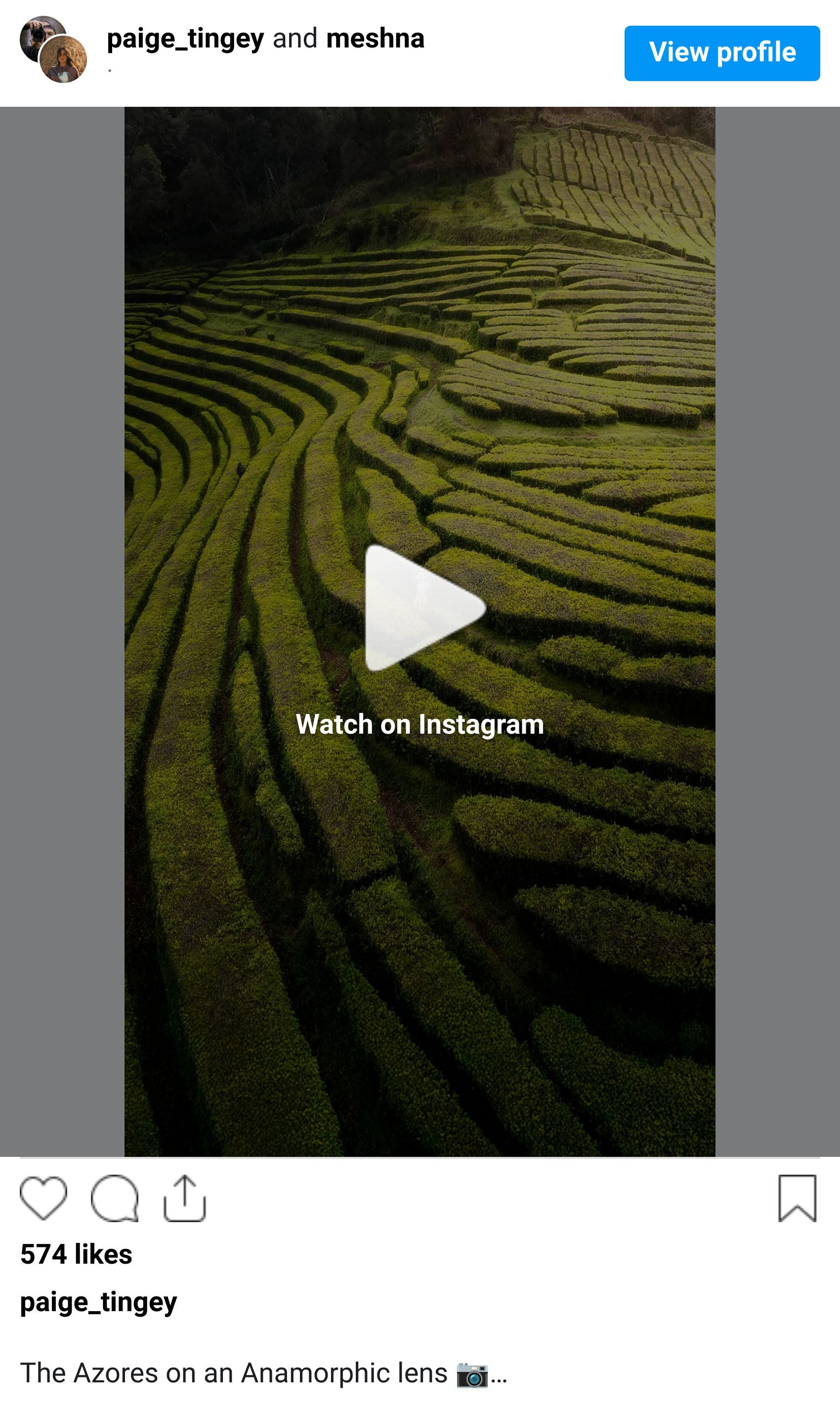
First, I just dropped a reel from the Azores shot entirely on an anamorphic lens with my friend @meshna, and I am obsessed with how it turned out.
There's something about that stretched, cinematic look that makes even a simple scene feel like it belongs in a movie. If you haven't checked it out yet, I'd love to hear what you think.
In other news: I'm heading to Washington DC in a couple weeks for a partnership that I still haven't fully processed.
It's with a brand I grew up admiring, the kind of name that made me want to pick up a camera in the first place. I can't say more just yet… But when I can, you'll hear it here (or on Instagram) first!
This week's tip is something that sounds small but quietly reshaped how I approach large scale compositions. I started doing it years ago and it became major go-to for me. Now I see it all over my recent work, even though I don’t consciously think about it anymore.
Tip of the Week: Add Something to Your Landscape

Earlier on in my photography journey, I often avoided having people in my landscape shots. I wanted "clean" compositions with nothing but nature. Sometimes this was great and sometimes I felt like the scene was missing some sort of context.
Then I started experimenting with adding scale by placing a recognizable object in the frame. It could be a person, a tent, a car, a boat, an animal, really anything that our brains will look at and understand the general size of the object.
Here’s what that small element does to a landscape photo:
It creates instant scale. A waterfall is just a waterfall until someone is standing at the base of it. Suddenly the viewer understands exactly how massive it is. That emotional "whoa" comes from context, and a person provides it immediately.
It gives viewers an entry point. When someone looks at a landscape, their eye can wander. Add a tent and the viewer's eye goes straight to that first, then explores outward. It's a built-in focal point that guides the composition without you needing to do anything else.
It tells a story. A mountain is a beautiful landscape, but sometimes you want to capture a unique moment. Adding a person staring up at a mountain can add emotion, wonder, narrative. People project themselves onto that figure, they imagine being there, and that connection is what makes a photo stick with someone.
A few practical things I've learned:
Place the person (or element) where the eye naturally falls - rule of thirds intersections, leading lines, natural framing.
Don't center them unless the symmetry calls for it.
Smaller is often powerful for landscapes because the contrast between the tiny figure and the massive environment is what creates the impact.
If you're shooting yourself, a tripod and a 10-second timer go a long way. (I've sprinted into more shots than I'd like to admit.)
Try it on your next shoot. Even if you normally avoid having objects in your landscapes, take one version with and one without. Compare them. Both have their time & place, but I think you might be surprised at how much context it gives.
What's Happening in Photography Right Now

Sony World Photography Awards 2026 shortlist announcement. The Sony World Photography Awards shortlist is expected any day now. With categories spanning landscape, portraiture, street, and architecture, it's one of the biggest annual showcases of global photography talent. Worth bookmarking if you want to see what the best in the world are producing right now, and it's free to enter each year if you've been thinking about submitting your own work.
Apple is reportedly working on a dedicated camera app redesign for iPhone. Reports suggest Apple is overhauling the iPhone camera app with more manual controls, including better RAW shooting, manual focus, and histogram display. If true, it would bring the iPhone closer to a legitimate creative tool rather than just a point-and-shoot. No confirmed release date, but interesting for anyone who shoots with their phone alongside their main camera.
Gear Worth Mentioning: A Simple Wireless Remote

This one ties into this week's tip. If you want to start putting yourself in your landscapes and you often shoot solo, a wireless remote makes the whole process way less chaotic than the sprint-from-your-tripod-before-the-timer-runs-out approach.
I often shoot with friends who can help trigger the camera, but I know a lot of you are out there solo and this is a simple solve. You set up your tripod, compose the shot, walk into position, and click. Done.
Most camera brands make their own Bluetooth remote (Sony's RMT-P1BT, Canon's BR-E1, Nikon's ML-L7). They can be pricey, but I found this universal remote that should work with most cameras and save you some money.
They're tiny, fit in your pocket, and pair with your camera in seconds. If you want something universal that works across brands, your camera's companion app (Sony Imaging Edge, Canon Camera Connect, Nikon SnapBridge) can also trigger the shutter from your phone, though a dedicated remote is usually faster and more reliable in the field.
(Full transparency: I earn a small commission through this link. It helps keep this newsletter free and my coffee mug full. Thanks for supporting!)
One More Thing…

Going back to this week's tip, scroll through this Japan set and notice how many of the frames have something in them.
That wasn't always intentional at first. But after years of doing this, I've started to notice that my favorite images almost always have some kind of human element in them. Not because the landscape wasn't enough, but because that small detail turned a photo into something that felt like a memory instead of a postcard.
Not every shot needs it. Some of my favorite images are completely empty. But if you've been avoiding it, I'd push you to experiment.
So here's my question for you this week: Do you usually include people in your shots? Or do you prefer them empty and focused purely on the landscape? I'm definitely curious where everyone stands on this, so hit reply and let me know.
See you next week,
Paige
P.S. Curious how I edit my photos? These are the exact presets I use for almost every travel & landscape shoot (designed for both mobile and desktop).