
The Zooming Myth: What Changes (and What Doesn’t)
The Weekly Frame #13

Hi friends,
This week I’ve been trying to lock in travel for the next couple of months. When someone asks, “Where will you be next week?”, I honestly don’t always have an answer! But I have solidified a few partnerships…
At the end of this month, I’ll be heading to Washington DC for one of the most exciting partnerships I’ve ever had. (I can’t talk about it just yet but stay tuned!) And early March I’ll be in Taiwan for a festival I’ve dreamed of getting to see in person.
Even with some plans still up in the air, I can’t wait to share those experiences with you.
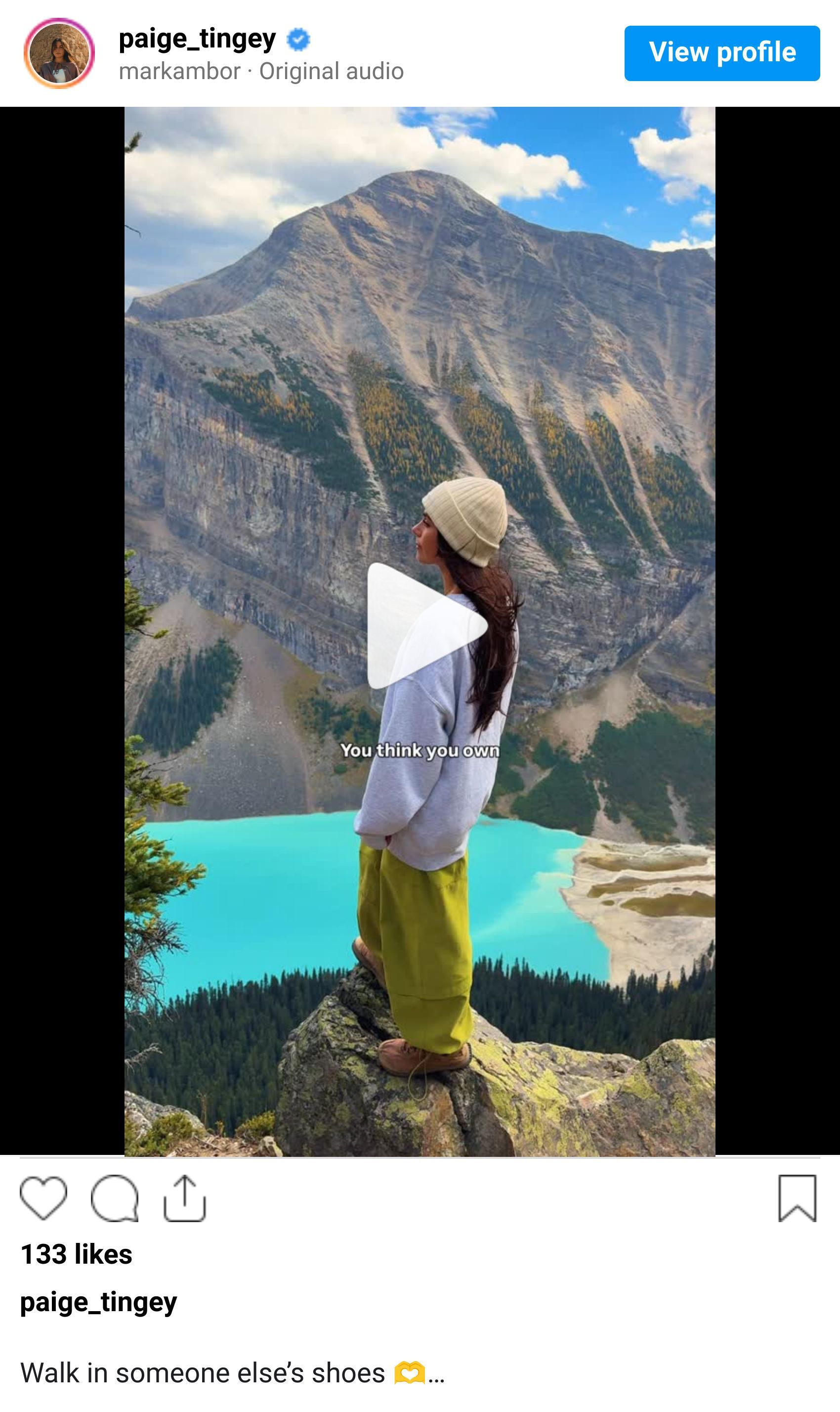
Before I jump into some concepts about zooming & focal length, I JUST posted this reel 30 minutes ago and I’d love for you to check it out! With so much chaos & confusion happening in the world right now, I hope this can be a positive reminder for us all…
Last week I broke down what focal length means. We talked about zoom lenses and use cases for different focal lengths.
It’s a lot to figure out and can definitely be overwhelming at first. Hopefully it was helpful. You can always revisit it if you need a refresher when deciding which lenses to buy or travel with, and the reasoning behind it.
So in this issue, we’ll dive into focal length and how it relates to perspective because a small shift can make a big difference.
Now let’s dive into part 2!
Tip of the Week: What Actually Changes When You Zoom (Part 2)

This week I want to tackle something that trips up even experienced photographers.
Here's the controversial take: focal length doesn't change perspective.
I know. That feels wrong. When you zoom in, everything looks different. But four different things are actually at play, and we usually mix them up:
Perspective → Controlled by your position (where you're standing)
Framing → Controlled by focal length (how much of the scene you see)
Depth of Field → Controlled by aperture + distance + focal length
Detail/Resolution → How much of your sensor your subject uses
When you zoom without moving, perspective stays exactly the same. What changes is framing, depth of field, and how much detail you're capturing of your subject.
This is why zooming "feels" like compression but isn't actually changing perspective. The background fills more of the frame. The blur increases. Our brains read that as compression. But true compression? That only comes from physically moving farther away.
It's also why that iPhone selfie at arm's length makes your nose look bigger. It's not the wide lens… it's actually just how close you are. The same face photographed from 6 feet away with a longer lens looks completely different because the distance changed the perspective.
Here's the practical takeaway: longer lenses aren't just about "compression." They preserve resolution without cropping, let you compose without moving, and increase background blur.
That's why they're used for portraits, wildlife, and travel… it's about control and image quality, not just perspective.
What's Happening in Photography Right Now

Wildlife Photographer of the Year People's Choice voting is open. 24 stunning images from over 60,000 entries across 113 countries have been shortlisted. The lineup includes flamingos against power lines, a crab hitching a ride on a jellyfish, and a pangolin orphaned by poachers being comforted with a blanket. Voting runs through mid-March with the winner announced March 25.
CP+ 2026 is shaping up to be the biggest show ever. The world's premier camera show runs February 26 through March 1 in Yokohama, Japan. With more exhibitors than ever, expect a wave of announcements later this month.
Canon may announce a fisheye zoom this month. Rumors point to an RF 7-14mm f/2.8-3.5 fisheye zoom - Canon's first fisheye for RF mount. At 7mm on full frame, it would deliver dramatic ultra-wide effects that astrophotographers and underwater photographers have been waiting for.
Gear Worth Mentioning: Peak Design Slide Camera Strap

If you're still using the strap that came with your camera, this might be the upgrade that makes the biggest difference in your daily shooting experience.
The Peak Design Slide has a quick-adjusting design that lets you go from carrying length to shooting length in one smooth motion - no fumbling with buckles while the light is changing.
What I really like: It's wide enough to be comfortable even with a heavy body and lens, but it doesn't feel bulky. The anchor system means you can quickly detach it if you're switching to a tripod or want to go strapless for a specific shot.
It's not the cheapest strap out there, but for something you'll use literally every time you pick up your camera, I’d say the quality is worth it.
(Full transparency: I earn a small commission through this link. It helps keep this newsletter free and my coffee mug full. Thanks for supporting!)
One More Thing…

Understanding what actually changes when you zoom versus move has genuinely shifted how I think about lens selection.
Before I knew this, I'd zoom in thinking I was "compressing" the background. Now I know: if I want actual compression, I need to physically move my feet. Zooming gives me tighter framing and shallower depth of field (both useful), but the relationship between my subject and background stays locked in from where I'm standing.
It’s one of those things that sounds technical, but once it clicks, it genuinely changes how you approach every shoot.
So here’s my question: When you're out taking photos, do you think about distance first or focal length first? Reply and let me know, I'm genuinely curious how other photographers approach this.
See you next week,
Paige
P.S. Curious how I edit my photos? These are the exact presets I use for almost every travel & landscape shoot (designed for both mobile and desktop).